
METHCESFUEL participates in the 24th edition of Sevilla Science Fair, with more than 35.000 visitors
The METHCESFUEL project is presented in the Science Fair through the University of Seville, reaching students from Primary school to pre-university levels
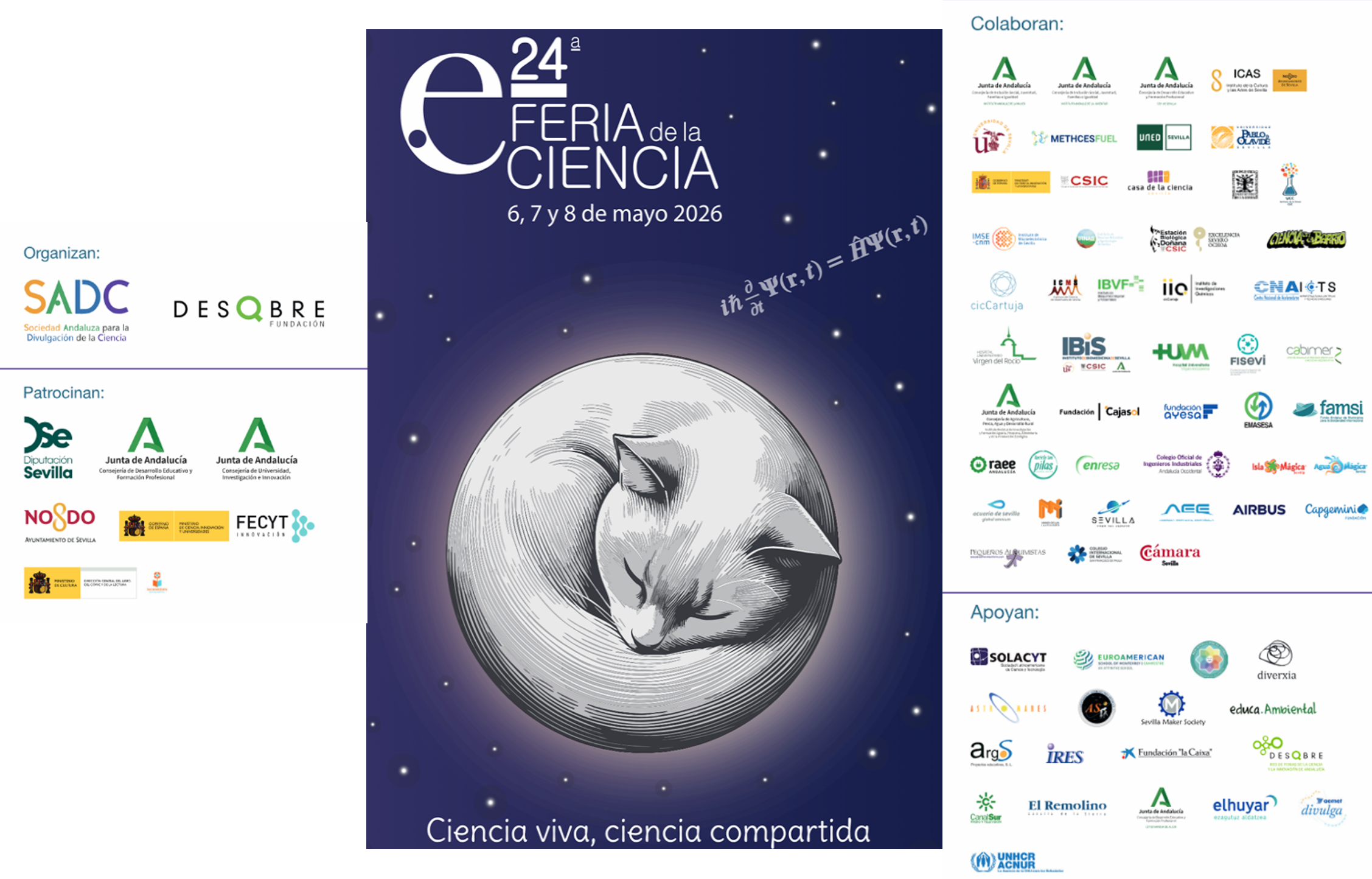
The recently launched METHCESFUEL project just expanded its reach by participating in the 24th edition of the Sevilla Science Fair, in Spain, the 6th, 7th, and 8th of May 2026. In this massive educational fair, science and research are brought directly to the public. This event is organized by the Andalusian Society for Science Dissemination (SADC) and brings together students from different parts of Andalusia every year. Over three days, the fair creates a space for sharing knowledge across various scientific fields, led by both professional researchers and high school students. Each project is presented at a stand, allowing visitors to explore topics of interest and learn first-hand about the daily work of scientific professionals through interactive activities.
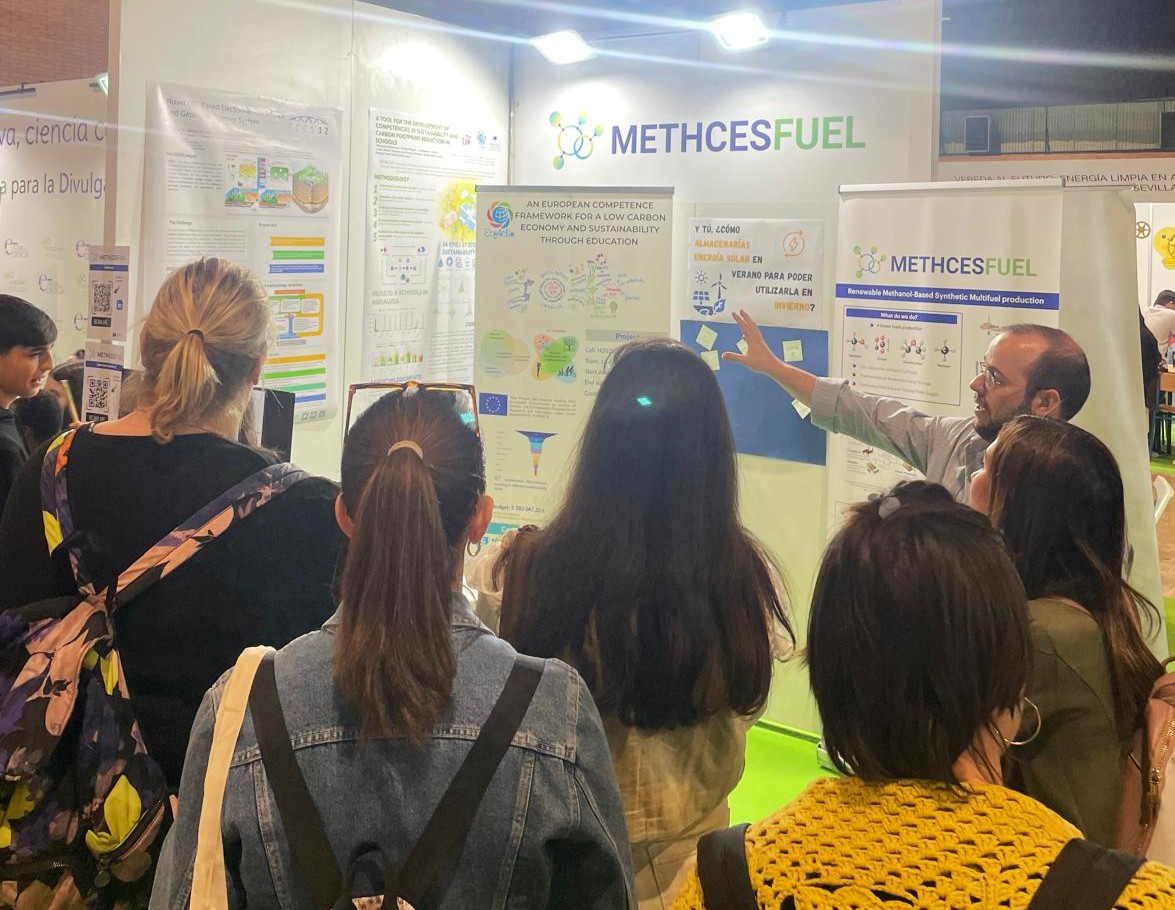
This year’s edition featured 148 different projects, receiving approximately 35.000 visitors over three days. The event provided a unique opportunity for the project to connect with a diverse audience that included 9.000 students from primary to pre-university levels, 1.000 teachers, and 900 scientific disseminators. The main topics of the fair were “Organic Agriculture, grazing, and diversity”, “Social science research and technology”, “The Schrödinger Equation” and the “Eclipse Trio in Spain (astronomy, eclipses, and space science)”, alongside with other free-themed projects of scientific interest.
From a dedicated stand, METHCESFUEL researchers translated research-level engineering into accessible knowledge for students, highlighting the importance of renewable energy storage technologies and fossil fuel alternatives in advancing the EU energy transition.
This outreach aligns with the METHCESFUEL core work line: developing a dual-purpose system for synthetic fuel production and thermochemical energy storage using green hydrogen and captured industrial carbon as primary feedstock. By integrating renewable energy storage with carbon-neutral fuel production, the project directly supports REPowerEU objectives of achieving energy independence through sustainable innovation.
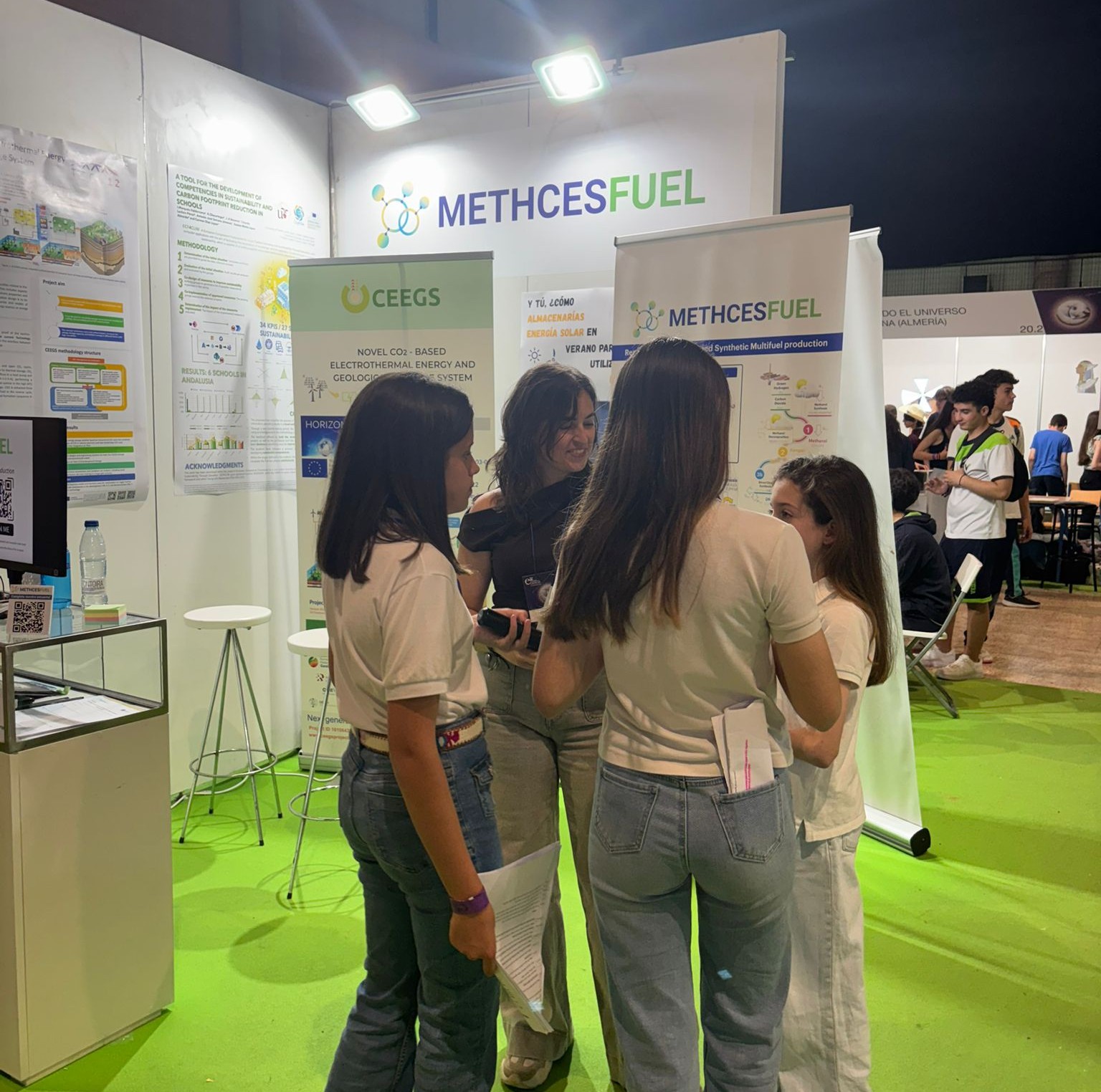
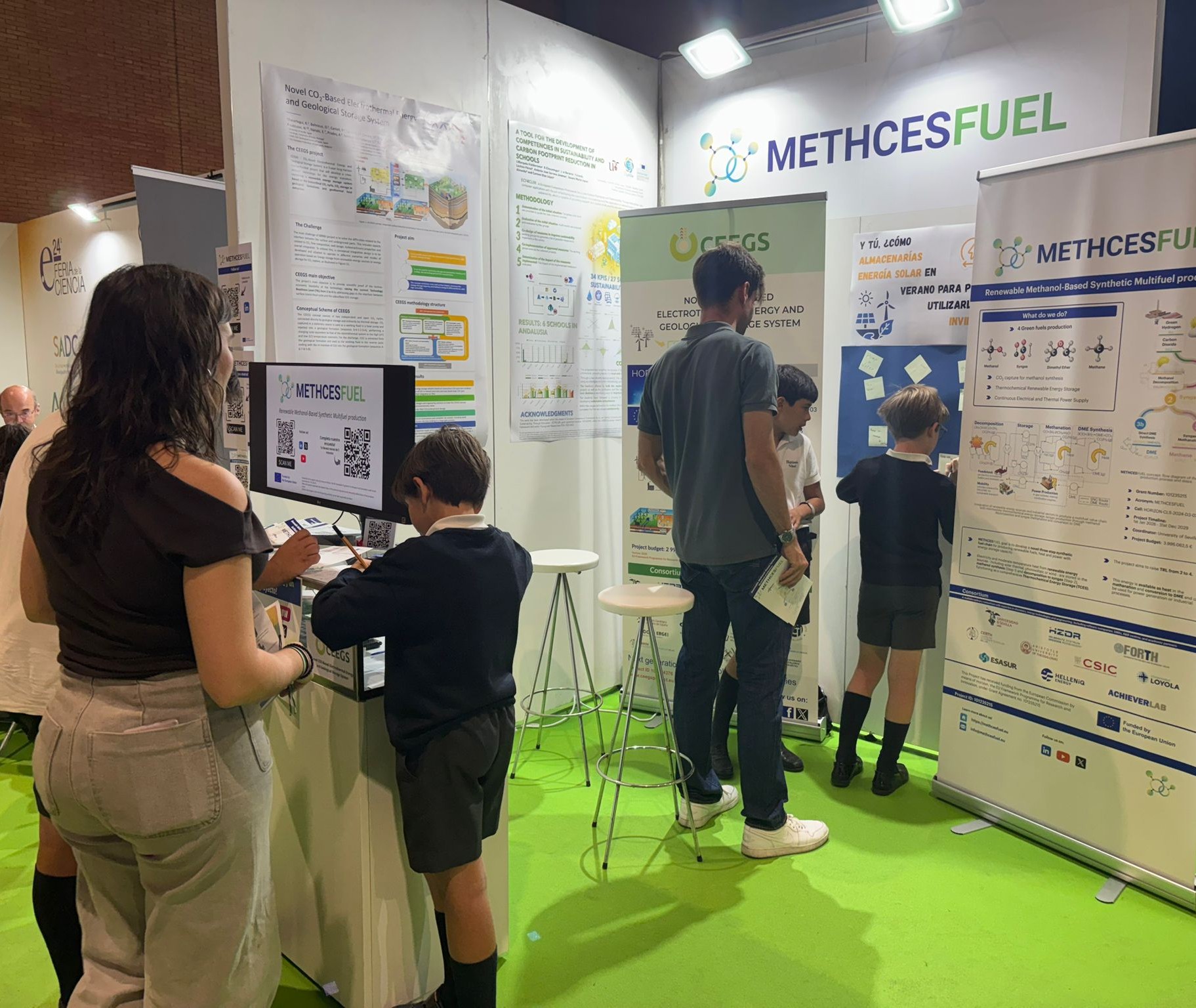
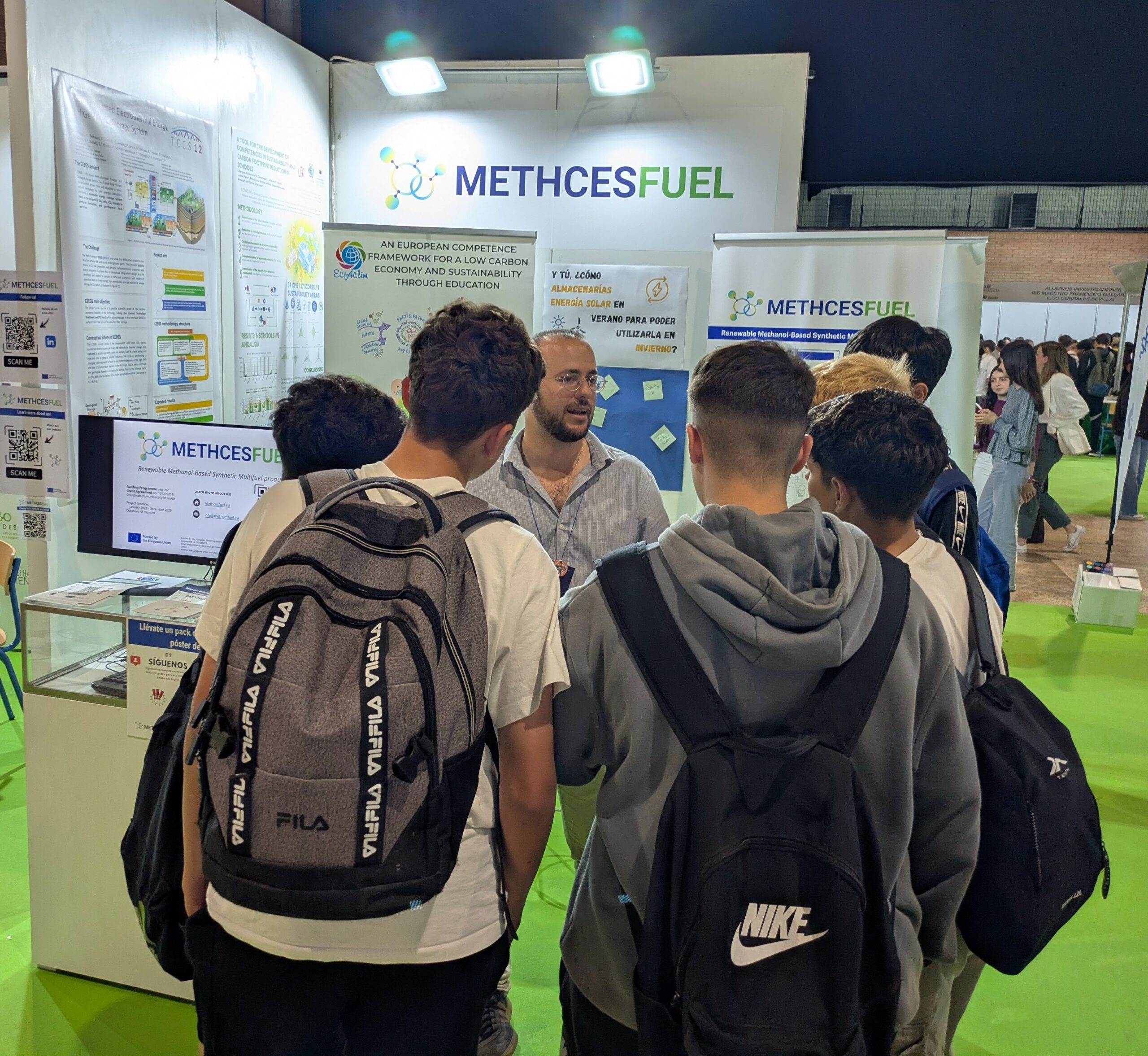
In this context, the team presented the concepts of renewable energy, energy storage, carbon capture, and synthetic fuels to attending students, highlighting their strategic role in the energy transition and EU decarbonization. Additionally, researchers conducted brief surveys regarding students’ perception of energy storage solutions and synthetic fuels, as well as their personal interest in pursuing scientific or research careers.
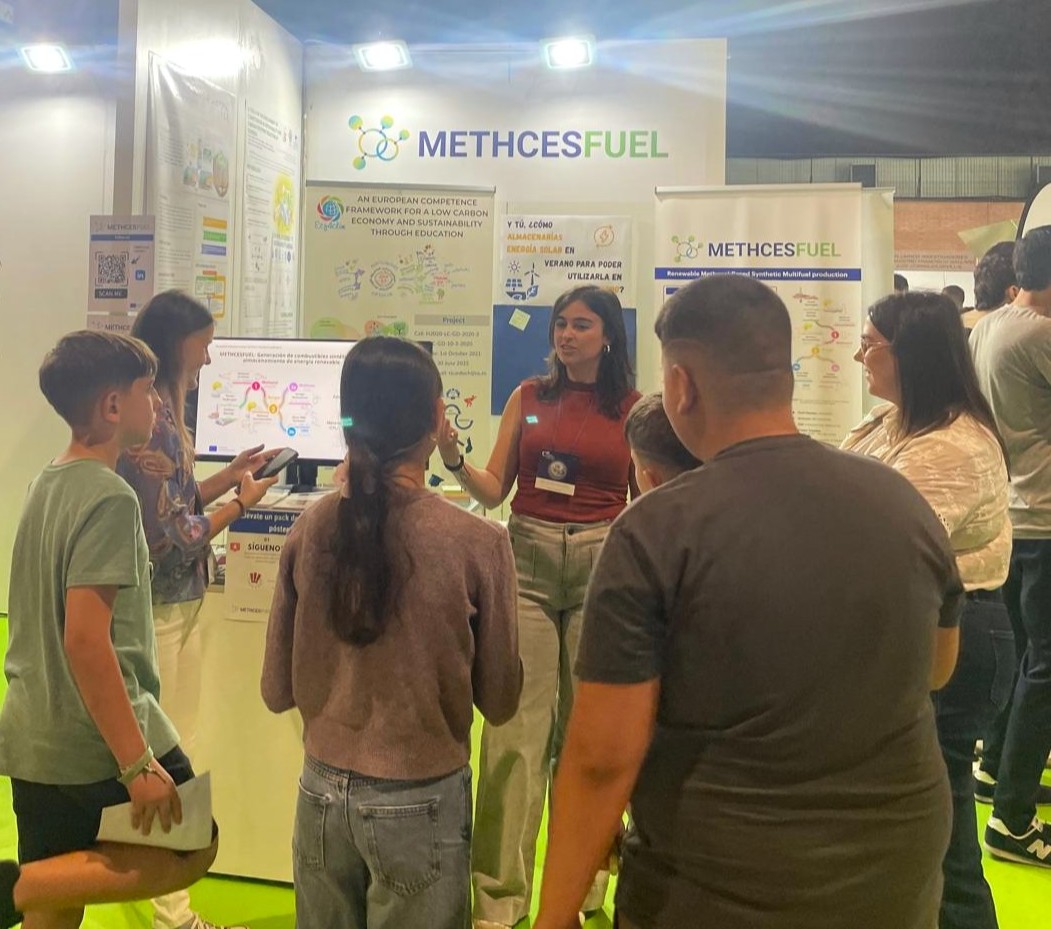
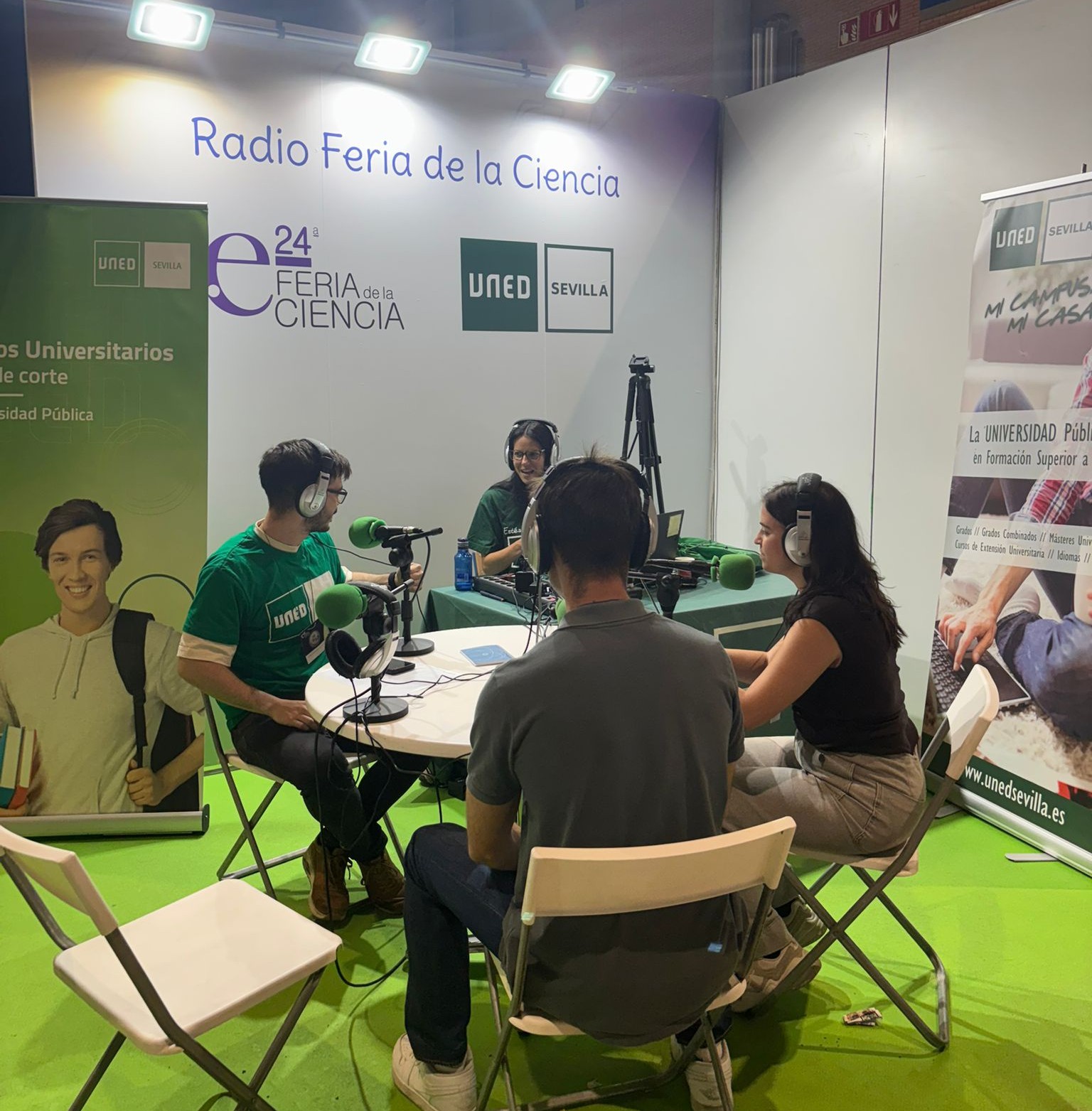

The project’s mission reached a broader audience through the researchers’ participation in a dedicated UNED radio program, where METHCESFUEL was featured in a short talk.
Ultimately, the project’s presence at the fair maximized the visibility of EU-funded research within the educational community, reinforcing the commitment to fostering scientific vocations and promoting the social awareness necessary for a sustainable future.

This is a very informative and useful article! Thank you for sharing these valuable insights. What are the biggest challenges related to this topic? Thank you, Regard Telkom University
Thank you for your comment and for your interest in the topic. One of the main challenges of the energy transition is managing the mismatch between renewable energy production and energy demand. As the share of wind and solar power grows, their inherent intermittency makes it increasingly important to develop large-scale and long-duration energy storage solutions capable of decoupling energy generation from its final use. This is particularly relevant in sectors such as maritime or heavy-duty transport and energy-intensive industries, where direct electrification is often difficult or not economically viable.
E-fuels are among the solutions being explored to address this challenge. By converting renewable electricity into energy-dense fuels, they provide a vector to store energy over long periods, transport it across regions, and utilise existing fuel infrastructure. However, their deployment still faces several challenges, including the availability and cost of key resources such as green hydrogen and captured CO₂, as well as their dependence on variable renewable electricity supply.
This is the main challenge that METHCESFUEL addresses: decoupling fuel production from renewable resources availability. Through an intermediate syngas storage step, renewable energy can be stored when available and later converted into synthetic natural gas (SNG) or dimethyl ether (DME) when needed. This concept provides greater flexibility by decoupling multi-fuel production from renewable resource availability, helping to address some of the key challenges associated with renewable energy integration and e-fuel production.
What role does participation in science fairs play in promoting innovation and public awareness of new technologies?
Thank you for your question. It highlights an important aspect of innovation that is sometimes overlooked. Participating in science fairs is a great way to connect research with society, giving us the opportunity to engage directly with students, families, fellow researchers, and the wider public.
Beyond raising awareness, these events help make novel technologies easier to understand by showing how they work in practice and the real challenges they address. People can learn about current research in many areas, such as renewable energy, energy storage, and synthetic fuels, and understand why these topics are becoming increasingly important. For young people, they can spark curiosity, encourage critical thinking, and even inspire future careers in science and engineering. For the broader public, they offer a chance to learn about the latest advances in science and technology, explore topics beyond their own field of expertise, and gain a better understanding of how new ideas are developed and turned into practical solutions for real-world challenges.
At the end of the day, science fairs are about bringing innovation closer to people, helping them understand the research behind new technologies and their role in addressing the challenges of the future.